


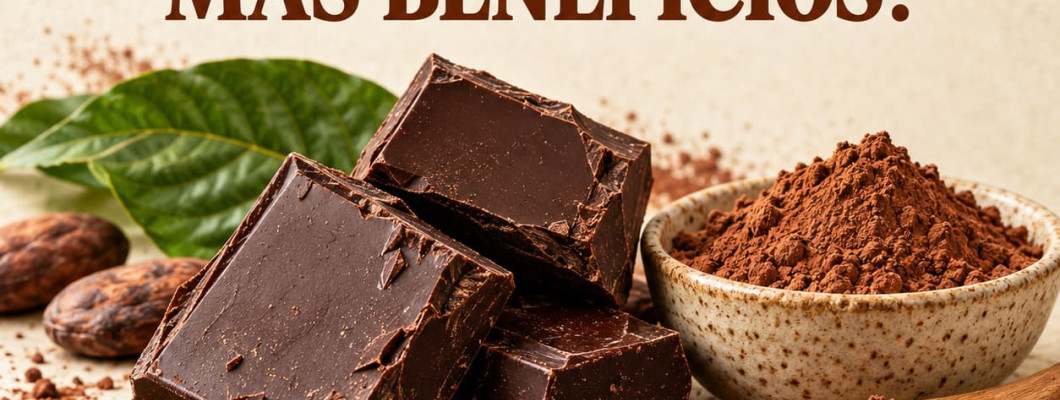
Spain gets through 3.03 kg of chocolate and cocoa per person per year, around 8 grams a day on average, according to the 2024 food consumption report from the Spanish Ministry of Agriculture, Fisheries and Food. That happens to be close to the amount that appears in the European scientific opinion behind the only authorised health claim for cocoa. The difference is that the opinion is talking about a very particular chocolate, and 63.9 % of what is eaten here is chocolates, snacks, drinking cocoa and spreads.
This post is about a single number: 200 mg of cocoa flavanols a day. That is what EU law requires before anyone can say cocoa helps keep blood vessels elastic. We will work out how much dark chocolate or how much cocoa powder it actually takes to get there, why the percentage on the wrapper will not let you calculate it, and why, if flavanols are the goal, the bar is not the best vehicle. We are not going to sell you a square as medicine.
The short version
- There is exactly one authorised claim in the EU: “Cocoa flavanols help maintain the elasticity of blood vessels, which contributes to normal blood flow”, on condition of 200 mg of flavanols a day with a degree of polymerisation of 1 to 10 (Regulation (EU) 851/2013).
- The opinion behind it, from EFSA — the European Food Safety Authority, the EU's scientific agency for food — states that those 200 mg are provided by 2.5 g of high-flavanol cocoa powder or 10 g of high-flavanol dark chocolate. The word “high-flavanol” is not decorative: it works out at 2,000 mg of flavanols per 100 g of bar.
- Twelve supermarket dark chocolate bars were measured at between 93.5 and 651.1 mg of flavanols per 100 g. With the best one you would need 31 g a day; with the worst, 214 g.
- The cocoa percentage does not predict flavanols: the measured correlation was R² = 0.41. Part of that percentage is cocoa butter, which contains no flavanols.
- Alkalising cocoa powder destroys up to 89 % of the flavanols: from 34.6 mg/g in natural powder to 3.9 mg/g in heavily alkalised powder.
- The clinical evidence is modest, and worth saying plainly: −1.76 mmHg of systolic blood pressure in a Cochrane review of 35 trials, with no significant effect in people with normal blood pressure; and in 21,442 older adults, cocoa extract did not reduce the primary cardiovascular outcome.
- None of the cocoa and chocolate lines in our catalogue states its milligrams of flavanols, so none of them can carry that claim — and we are not going to put it on them.
What cocoa flavanols are and what the law actually says
Flavanols are polyphenols from the cocoa bean; the ones that matter here are epicatechin, catechin and their polymers, the procyanidins. The mechanism is well described: epicatechin increases nitric oxide availability in the endothelium, the endothelium relaxes the vessel wall, and the vessel dilates. That is what flow-mediated dilation measures, and it is what EFSA accepted as a beneficial physiological effect.
The application came from Barry Callebaut Belgium N.V., one of the largest industrial cocoa manufacturers in the world, under Article 13(5) of Regulation (EC) 1924/2006 — the route reserved for newly developed scientific evidence and proprietary data. EFSA delivered its opinion on 17 July 2012, concluding that a cause and effect relationship had been established (question EFSA-Q-2012-00002, EFSA Journal 2012;10(7):2809), and noted that it could not have reached that conclusion without one human intervention study claimed as proprietary, Grassi D and colleagues, 2011.
Regulation (EU) 851/2013 added the claim to the EU list in this official wording, which is the only one that may be used: “Cocoa flavanols help maintain the elasticity of blood vessels, which contributes to normal blood flow”. And with these conditions, also literal: “Information shall be given to the consumer that the beneficial effect is obtained with a daily intake of 200 mg of cocoa flavanols. The claim can be used only for cocoa beverages (with cocoa powder) or for dark chocolate which provide at least a daily intake of 200 mg of cocoa flavanols with a degree of polymerisation 1-10.”
In 2015, Regulation (EU) 2015/539 extended the claim to capsules and tablets of high-flavanol cocoa extract, after a second opinion (EFSA Journal 2014;12(5):3654) built on a pharmacokinetic study in six subjects. Same wording, same 200 mg.
And there is a third thing the law says by omission. In 2010 EFSA assessed two further cocoa flavanol claims: protection of lipids from oxidative damage (ID 652, 1372, 1506 and 3143) and maintenance of normal blood pressure (ID 1507), in opinion EFSA Journal 2010;8(10):1792. Neither of them is on the list of authorised claims. If someone tells you dark chocolate is an antioxidant or that it lowers blood pressure, they are not quoting EU law: they are saying precisely what EU law does not allow you to say.
Why the cocoa percentage will not tell you how many flavanols are in there
This is the part that decides the purchase, so it is worth following. The big number on the bar measures one thing and the regulator asks for another.
1. Fermentation, roasting and alkalising eat the flavanols
A fresh cocoa bean is ferociously bitter and inedible. Everything that turns it into chocolate — fermenting, drying, roasting and, for powder, alkalising — reduces flavanols. Payne MJ and colleagues measured it step by step in 2010 (J Agric Food Chem 2010;58:10518-10527) and alkalising turned out to be the most destructive step of all.
Two years earlier, Miller KB and colleagues had analysed 20 commercial cocoa powders from five manufacturers (J Agric Food Chem 2008;56(18):8527-8533). The results, as total flavanols per gram: 34.6 mg/g for natural powder (5 samples), 13.8 for lightly alkalised (4), 7.8 for medium (5) and 3.9 mg/g for heavily alkalised (6). Heavily alkalised powder retains 11.2 % of the flavanols of natural powder.
Alkalising — Dutch processing — is done to make the powder darker, more soluble and less acidic. Which is to say, precisely so that instant cocoa dissolves properly in milk. It is a reasonable technological choice with a biological price, and it almost never appears on the front of the pack.
2. Cocoa butter contributes no flavanols
Directive 2000/36/EC defines “chocolate” as a product containing at least 35 % total dry cocoa solids, of which at least 18 % must be cocoa butter and 14 % fat-free dry cocoa solids. To add quality qualifiers to the name you need 43 % total dry cocoa solids and 26 % cocoa butter. The same rule requires the label to state “cocoa: … % minimum”.
There is the arithmetic trap: the percentage you read on the bar is total dry cocoa solids, butter included. And butter is fat: it has no flavanols. Two bars advertising the same 85 % can have very different butter proportions and therefore very different flavanol contents. The number on the label is accurate and lawful; it simply does not measure what the shopper thinks it measures.
Note too that “dark chocolate” does not exist as a legal designation. The directive recognises “chocolate”, “milk chocolate”, “couverture chocolate” and a few more. “Dark” is a commercial word, which is why it can sit on very different things along the same chocolate shelf.
3. What was measured in twelve supermarket bars
Langer S, Marshall LJ, Day AJ and Morgan MRA analysed 14 commercial bars and quantified the flavanols of 12 commonly consumed dark chocolate brands (J Agric Food Chem 2011;59(15):8435-8441). The range ran from 93.5 to 651.1 mg of epicatechin equivalents per 100 g: a sevenfold gap between best and worst. Milk chocolate came in at 40.6 mg/100 g and white at 0.0.
The decisive part is the other half of the study: fat-free cocoa solids did not predict epicatechin content (R² = 0.41) or total flavanols, and the authors conclude that the labelled cocoa content did not always reflect the analysed flavonoid levels.
One honest caveat: those values are expressed as epicatechin equivalents, while the EU regulation speaks of flavanols with a degree of polymerisation of 1 to 10. They are not quite the same analytical unit, so the sums that follow are order-of-magnitude estimates. The order of magnitude is exactly the problem.
The 200 mg sum, with the real numbers
The 2012 EFSA opinion is explicit: those 200 mg “could be provided by 2.5 g of high-flavanol cocoa powder or 10 g of high-flavanol dark chocolate”. Ten grams of a bar is a small square and sounds easy. But 200 mg in 10 g works out at 2,000 mg of flavanols per 100 g, three times the best of the twelve bars Langer measured. The chocolate in the opinion is not the chocolate on the shelf.
In the 2014 opinion, the high-flavanol products used in the study delivered 449 mg per portion for the extract capsule, 459 mg for the powder and 460 mg for the dark chocolate, against 27 mg for the low-flavanol powder and 60 mg for the low-flavanol bar. That is the distance between a product built for a trial and a product from a supermarket.
| Format | Measured flavanols | Amount needed for 200 mg | Source of the measurement |
|---|---|---|---|
| Natural cocoa powder, not alkalised | 34.6 mg/g | 5.8 g | Miller 2008, 5 samples |
| Lightly alkalised cocoa powder | 13.8 mg/g | 14.5 g | Miller 2008, 4 samples |
| Medium alkalised cocoa powder | 7.8 mg/g | 25.6 g | Miller 2008, 5 samples |
| Heavily alkalised cocoa powder | 3.9 mg/g | 51 g | Miller 2008, 6 samples |
| Dark chocolate, best of 12 bars | 651.1 mg/100 g | 31 g | Langer 2011 |
| Dark chocolate, worst of 12 bars | 93.5 mg/100 g | 214 g | Langer 2011 |
| Milk chocolate | 40.6 mg/100 g | 493 g | Langer 2011 |
| White chocolate | 0.0 mg/100 g | never reached | Langer 2011 |
| High-flavanol dark chocolate from the opinion | 2,000 mg/100 g | 10 g | EFSA Journal 2012;10(7):2809 |
Bar flavanol values are epicatechin equivalents. The amounts are our own calculations from those measurements, not label values.
Let us turn the two interesting rows into real food. According to the Ciqual database of ANSES, the French food safety agency (2017 version), 100 g of dark chocolate with at least 70 % cocoa contains 572 kcal, 41.6 g of fat — 26.2 g of it saturated — 35 g of carbohydrate including 27.6 g of sugars, and 11.9 g of fibre. So 31 g of the best bar is about 177 kcal and 8.6 g of sugars, every day. And 214 g of the worst would be more than 1,200 kcal a day, which turns this into a different conversation altogether.
The 5.8 g of natural cocoa powder, by contrast, fits in a level spoonful, carries no added sugar, and goes into yoghurt or the oat flakes at breakfast. If flavanols are genuinely what you are after, the format that wins the sum is not the bar.
What to do, concretely
1. Start with cocoa powder, not with the bar
It is the only format where 200 mg fits in a spoonful. Sol Natural cocoa powder, Ecosalim cocoa powder and Alternativa pure premium cocoa sit in the chocolate and cocoa category and in superfoods, depending on the line. They are also the cheapest option per milligram of flavanol, though we do not discuss prices here.
2. Check whether the powder is alkalised
Natural powder is reddish brown and clearly acidic on the palate; alkalised powder is darker, almost black, and much smoother. Look for the words “natural”, “pure” or “non-alkalised” on the label. If it says nothing, ask: the gap between 34.6 and 3.9 mg/g is not a nuance, it is nearly tenfold. And if the product page does not make it clear, chasing the supplier is our job, not yours.
3. If you want a bar, choose it on the profile and not the headline
A 91 % Congo, a 100 % Peru or a 99 % Panama with coconut sugar are low in sugar and full of character. A 70 % Ecuador or a 72 % Nicaragua are easier to eat daily. None of them states its flavanols, so choose on origin, texture and taste, which are real and checkable criteria.
4. Use nibs if what you want is minimally processed cocoa
Cocoa nibs are cracked, roasted bean, unalkalised and unsweetened. We do not have their declared flavanol content — nobody declares it — but by construction they are the least processed product in the whole family. They work in yoghurt, in muesli and in baking.
5. Spread the portion out, do not save it up
The condition attached to the claim is a daily intake, not a weekly one. Two hundred milligrams seven days running is not the same as fourteen hundred on Sunday, and Sunday's bar brings its own concentrated sugar. This is the part of the advice we do not sell, because it costs nothing.
6. If blood pressure is the goal, measure it
The effect seen in the trials shows up mainly in people with hypertension, so the only way to know whether it works for you is to have a number before and a number after. A home blood pressure monitor settles more than any bar, and if you are on medication, that conversation belongs with your doctor. What we wrote about how much olive oil per day and how to reach 25 g of fibre plays on the same cardiovascular ground.
What the clinical evidence says, and where it falls short
Blood pressure: two millimetres, and not in everyone
The Cochrane review by Ried K, Fakler P and Stocks NP (Cochrane Database of Systematic Reviews 2017, CD008893) pooled 35 trials with 40 comparisons and 1,804 participants, lasting two to eighteen weeks, nine on average. Doses ranged from 30 to 1,218 mg of flavanols a day, mean 670 mg, in amounts of cocoa product running from 1.4 to 105 grams daily.
The result: −1.76 mmHg systolic (95 % CI −3.09 to −0.43) and −1.76 mmHg diastolic (95 % CI −2.57 to −0.94). In people with hypertension systolic pressure fell by about 4 mmHg (9 comparisons, 401 participants); in people with normal blood pressure there was no significant difference (23 comparisons, 1,063 participants).
And two warnings the authors put up front themselves: they downgraded the quality of the evidence from high to moderate because of heterogeneity they could not explain, and excluding trials with authors employed by the sponsoring industry reduced the effect size, “indicating some reporting bias”. The mean dose in those trials, 670 mg, is more than three times what the claim asks for.
Cardiovascular events: the big trial did not land
COSMOS is the trial that had to be done: 21,442 US adults (12,666 women aged 65 or over and 8,776 men aged 60 or over), cocoa extract providing 500 mg of flavanols a day including 80 mg of (−)-epicatechin, against placebo, with a median follow-up of 3.6 years (Sesso HD et al., Am J Clin Nutr 2022;115(6):1490-1500).
The primary cardiovascular outcome did not reach significance: HR 0.90 (95 % CI 0.78 to 1.02; p = 0.11). One secondary outcome did, cardiovascular death, at HR 0.73 (0.54 to 0.98), a 27 % reduction. All-cause mortality came in at 0.89 (0.77 to 1.03) and the per-protocol analysis at 0.85 (0.72 to 0.99).
That reading of the secondary outcome was challenged: a letter to the editor in the same journal pointed out the bias introduced by using a composite outcome to evaluate the supplement (Ramírez PC and Diaz-Quijano FA, Am J Clin Nutr 2022;116(5):1452). The honest sentence is this one: the big trial did not show what it set out to show, it left an interesting signal on cardiovascular mortality, and more is needed.
Memory: nothing here at all
The cognitive arm of COSMOS, COSMOS-Mind, followed 2,262 participants averaging 73 years of age for three years on the same 500 mg of flavanols (Baker LD et al., Alzheimer's & Dementia 2023;19(4):1308-1319). The effect of cocoa extract on global cognition was z = 0.03 (95 % CI −0.02 to 0.08; p = 0.28). Zero.
Oddly enough, in the same trial the multivitamin did show a benefit (z = 0.07; 95 % CI 0.02 to 0.12; p = 0.007). If that ground interests you, we cover it in how much creatine per day and the brain claim, where the European Commission has just refused a cognitive claim for comparable reasons.
Cadmium: why the legal limit rises as the chocolate gets darker
Cocoa takes up cadmium from the soil, and cadmium concentrates in the non-fat part of the bean. That is why Regulation (EU) 2023/915, which sets maximum levels for contaminants in food, gives not one figure but four, in point 3.2.15: 0.10 mg/kg for milk chocolate with less than 30 % total dry cocoa solids; 0.30 mg/kg for chocolate with less than 50 % and for milk chocolate with 30 % or more; 0.80 mg/kg for chocolate with 50 % or more total dry cocoa solids; and 0.60 mg/kg for cocoa powder sold to the final consumer.
Put another way: the chocolate chosen by the health-minded shopper is the one with the limit eight times higher, and that is coherent rather than contradictory. The limit rises because the amount of cocoa rises, and the legislator has worked it out so exposure stays acceptable. A dedicated limit means the risk is bounded and monitored, not that the product is dangerous.
The arithmetic helps place it. EFSA set a tolerable weekly intake for cadmium of 2.5 µg per kilogram of body weight (The EFSA Journal 2009, 980, 1-139): for a 70 kg person, 175 µg a week, about 25 µg a day. Ten grams of an 85 % chocolate sitting exactly at the legal maximum would deliver 8 µg, 32 % of that daily share; the 31 g needed to reach 200 mg of flavanols with the best measured bar would deliver almost 25 µg, the whole share.
With two caveats. The first, reassuring: 0.80 mg/kg is a legal ceiling, not an average, and most products sit well below it. The second, less so: EFSA estimated average European cadmium exposure at 2.3 µg/kg of body weight per week (range 1.9 to 3.0), already close to the limit by other routes. One more reason for the flavanols to come from a spoonful of powder rather than a whole bar.
What the label of a 70 % bar can say, and what it cannot
This is the table worth carrying in your head at the shelf. We use the Ciqual 2017 composition for dark chocolate with at least 70 % cocoa, the thresholds in the annex to Regulation (EC) 1924/2006, and the nutrient reference values in Annex XIII to Regulation (EU) 1169/2011.
| Claim | Legal threshold per 100 g | A 70 % bar | Can it carry it? |
|---|---|---|---|
| High fibre | 6 g or more | 11.9 g of fibre | Yes |
| High copper | 30 % of the NRV, 0.3 mg | 1.4 mg, 140 % of the NRV | Yes |
| High magnesium | 30 % of the NRV, 112.5 mg | 178 mg, 47 % of the NRV | Yes |
| High potassium | 30 % of the NRV, 600 mg | 727 mg, 36 % of the NRV | Yes |
| High iron | 30 % of the NRV, 4.2 mg | 4.18 mg, 29.9 % of the NRV | No, by 0.02 mg |
| Source of protein | 12 % of the energy value | 8.44 g, 5.9 % of the energy value | No |
| Low in saturated fat | 1.5 g or less | 26.2 g of saturates | No |
| Cocoa flavanols and vessel elasticity | 200 mg a day of DP 1-10 flavanols | not stated on any label | Impossible to know |
Ciqual 2017 (ANSES) composition for dark chocolate with at least 70 % cocoa. The NRV percentages are our own calculations.
Two readings. The favourable one: a very dark chocolate bar genuinely is high in fibre, copper, magnesium and potassium, and that is not marketing, it is the law. The less comfortable one: all of that is measured per 100 g, and you do not eat 100 g. A 10 g square gives 17.8 mg of magnesium, 4.7 % of the reference value, which is not even enough to say “source of”. For the minerals to count you have to eat amounts that bring 26.2 g of saturates and 27.6 g of sugars per 100.
And look at the iron detail: 4.18 mg against the 4.2 mg the threshold demands. It misses “high in iron” by two hundredths of a milligram. A criterion that disqualifies by that little is the best proof that these thresholds are numerical rather than rhetorical. If iron is your concern, we take it seriously in iron and tiredness.
Four myths worth dismantling
- “The higher the cocoa percentage, the more antioxidants.” It does not hold. The measured correlation between fat-free cocoa solids and epicatechin was R² = 0.41, the percentage on the label includes cocoa butter, which has no flavanols, and alkalising can remove 89 % of what was there. A badly processed 85 % can hold fewer flavanols than a well-made 70 %.
- “Dark chocolate lowers blood pressure.” It lowers it by 1.76 mmHg on average in the Cochrane review, at mean doses of 670 mg of flavanols — three times the claim — and in amounts of up to 105 g of product a day. In people with normal blood pressure there was no significant difference. The European blood pressure claim for cocoa was assessed in 2010 and was not authorised.
- “Dark chocolate improves memory.” The trial that tested it properly, with 2,262 people, three years and 500 mg of flavanols a day, returned z = 0.03 and p = 0.28. That is not a small result: it is no result.
- “Milk cancels out cocoa flavanols.” Here the evidence has been in conflict for twenty years: Serafini and colleagues published in Nature in 2003 that milk reduced the antioxidant capacity of chocolate, a group led by Schroeter and Keen replied in the same journal disputing that reading (Nature 2003;426:787), and later work by Roura and colleagues found no effect on bioavailability. When two serious sources disagree, the honest thing is to say so rather than turn it into a house rule.
The fifth one goes straight against our own sales: none of the cocoa and chocolate lines in our catalogue states its milligrams of flavanols per 100 g. We went through the entire category. That means that, legally, none of them can carry the European claim, and nobody — us included — can promise you that one square gets you to 200 mg. What we can do is ask our suppliers for the figure, and we will.
The shopping list
For flavanols, in order of efficiency: Sol Natural cocoa powder, Ecosalim cocoa powder, Alternativa pure premium cocoa and cocoa nibs. They all live between chocolate and cocoa and superfoods.
For pleasure, in order of intensity: 100 % Peru, 91 % Congo, 99 % Panama, 88 % Bolivia, 85 % Madagascar, 85 % Nicaragua, 72 % Nicaragua and 70 % Ecuador. For anyone after chocolate rather than flavanols, milk chocolate and white chocolate with bourbon vanilla are what they are, and that is fine.
To drink it: drinking chocolate and instant cocoa, with the warning that soluble cocoa is usually alkalised. And loose, the vegan chocolate mini drops, which let you buy 100 grams to try instead of a kilo to regret.
To build the whole breakfast: cereals, bars and muesli, dried fruit and nuts, seeds, cookies, refrigerated for the yoghurt and fresh fruit. Coffee and teas share a shelf with cocoa. And if you would rather have it all arrive together, we have organic baskets and the week's offers.
On the supplement side, what really touches this ground sits in circulatory system, fatty acids, antioxidants and vitamins and minerals; the magnesium that always turns up in the chocolate conversation lives in nervous system.
Do you need a cocoa supplement?
Almost nobody does. The authorised claim has covered capsules and tablets of high-flavanol cocoa extract since 2015, with the same 200 mg, so a well-formulated supplement is the only guaranteed way to know how many flavanols you are taking. That is a legitimate argument and it deserves saying.
But the only large trial that tested exactly that — cocoa extract, 500 mg of flavanols a day, more than 21,000 older adults — missed its primary outcome, and the cognitive arm found nothing. Paying for a capsule whose clinical benefit is not demonstrated, when a spoonful of natural cocoa powder delivers a similar amount of flavanols along with fibre, magnesium and copper, is something we struggle to defend.
Our position, which does not suit us commercially: if you like dark chocolate, eat it because you like it. If flavanols are what you want, use non-alkalised cocoa powder and save yourself the capsule. And if cardiovascular risk is the worry, the order of priorities starts with tobacco, blood pressure, movement and the overall diet pattern, not with a square. We said the same about vitamin D and about oats, and we still think it.
Where to buy dark chocolate and cocoa powder in Barcelona and Sant Cugat
We have three shops, all three in Spain, in Barcelona and Sant Cugat del Vallès, and in all three you can do something no website allows: bring your bar or your tin and do the sum with us at the counter. Check whether the label states flavanols — it almost never does — check the total dry cocoa solids percentage, check whether the powder says “natural” or says nothing at all, and decide with the pack in your hand. It takes three minutes and costs nothing.
And you can do the other thing that cannot be done at a distance: compare two cocoa powders side by side, by eye and by nose. Natural powder is reddish brown and smells acidic; alkalised powder is almost black and smells flat. Once you have seen the two together, you never confuse them again.
- Provença 242, 08008 Barcelona, in the Eixample, between Balmes and Enric Granados.
- Còrsega 78, 08029 Barcelona, in the Eixample, near Sants station.
- Antoni Bell 2, 08174 Sant Cugat del Vallès, in the Volpelleres neighbourhood.
You can call us on +34 683 118 961 or write to linverd@linverd.com to ask about a specific line before coming over. If you would rather look at the range first, it is in chocolate and cocoa and across the whole pantry.
Frequently asked questions
How much dark chocolate can I eat a day?
It depends what for. For the 200 mg of flavanols in the European claim you would need between 31 and 214 g depending on the bar: between 177 and 1,224 kcal a day. To eat chocolate without displacing other food, a 10 g square gives about 57 kcal and 2.8 g of sugars.
What cocoa percentage should I look for?
The percentage is a guide to taste and sugar, not to flavanols: the measured correlation was R² = 0.41. For less sugar, higher is better. For flavanols the percentage is no help, and the label almost never gives the figure you would need.
Is cocoa powder better than a bar?
For flavanols, yes, and by a wide margin. The 200 mg fits in 5.8 g of natural powder and needs 31 g of the best measured bar. Powder also carries no added sugar and no butter, and because it needs fewer grams it brings less cadmium for the same milligrams of flavanol.
What is alkalised cocoa and how do I spot it?
It is cocoa treated with an alkali to make it darker, more soluble and less acidic. Colour and smell give it away: natural is reddish brown and acidic, alkalised almost black and smooth. In flavanol terms, heavily alkalised powder retains 11.2 % of what the natural one had.
Should I worry about cadmium in dark chocolate?
Worry, no; know about it, yes. Regulation (EU) 2023/915 allows 0.80 mg/kg in chocolate with 50 % or more cocoa and 0.60 mg/kg in cocoa powder. Ten grams at the legal maximum is 8 µg, about 32 % of the daily share derived from EFSA's tolerable weekly intake for a 70 kg adult. These are legal ceilings, not typical values.
Can I give dark chocolate to my dog?
No. The theobromine in cocoa is toxic to dogs, and the darker the chocolate the more of it there is, so an 85 % bar or cocoa powder are the worst cases. If your dog eats chocolate, call your vet with the packaging in front of you so they can work out the dose.
Where can I buy organic cocoa powder in Barcelona or Sant Cugat?
At our three shops in Spain: Provença 242 (08008 Barcelona), Còrsega 78 (08029 Barcelona) and Antoni Bell 2 (08174 Sant Cugat del Vallès). Bring the tin you have at home and we will compare it with ours in front of you, or call +34 683 118 961 to reserve a specific line.
Where to start this week
To sum up without decoration: the only thing the EU lets anyone say about cocoa requires 200 mg of flavanols a day, the percentage on the label cannot be used to calculate them, the format that reaches that figure with the fewest grams and the least sugar is non-alkalised cocoa powder, and the clinical evidence for dark chocolate is real but small and concentrated in people with hypertension.
If you want one thing to start with this week, start with a spoonful of cocoa powder at breakfast and keep the bar for pleasure, which is a perfectly good reason. The range is in chocolate and cocoa, and the rest of the health blog is there if you want to keep pulling the thread: we would point you to how much oats per day and how much olive oil per day, the two posts where you can best see what a European claim can and cannot promise.
And if you would rather talk it through in person, come to any of the three shops with your bar or your tin. We will do the sum at the counter.
This information is for general guidance and does not replace advice from a healthcare professional. If you have high blood pressure, are on medication, are pregnant or breastfeeding, or have a diagnosed condition, speak to your doctor or pharmacist before changing your diet or starting a food supplement.