


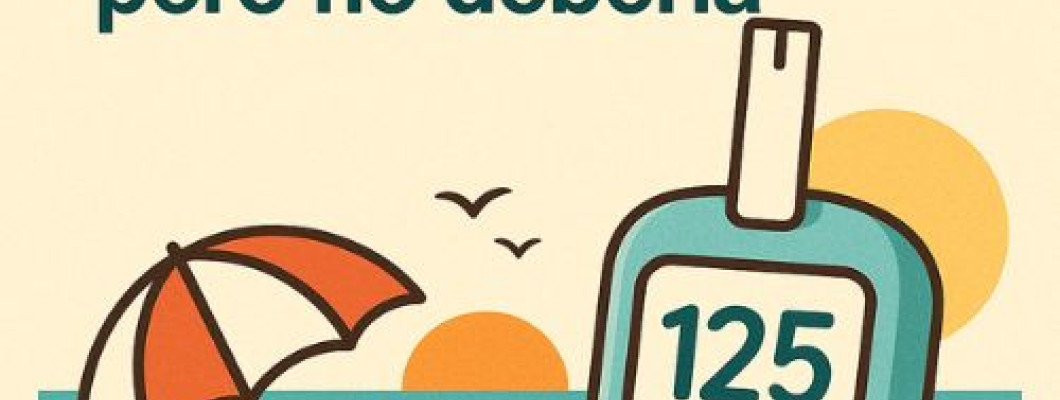
Your blood sugar also goes on vacation… but it shouldn't
It’s not your fault, but it is your responsibility to keep your blood sugar from going off the rails.
Today I want to talk to you about something that also takes a summer break… but really shouldn’t: your blood sugar.
Yes, that blood sugar that usually behaves, but in July and August thinks it’s partying in Ibiza.
And of course, you just wanted to enjoy an ice cream in the sun, and suddenly your energy crashes, you get ravenously hungry, and you don’t understand why.
1. What is a blood sugar spike and why should you care even in flip-flops?
Glucose is your body’s favorite energy source—especially for your brain and red blood cells. But like everything in life, it needs to be kept in check.
Your pancreas handles this with two key hormones:
- Insulin: stores glucose in muscles, liver, and fat.
- Glucagon: releases glucose into the bloodstream when needed (between meals, during fasting, intense exercise, or sleep).
Health professionals say that healthy fasting levels are between 60-90 mg/dl.
Above 110 mg/dl: a warning sign of insulin resistance.
After eating, levels up to 140 mg/dl are normal… but over 180 mg/dl, be careful!
The key point: not all spikes are bad. Physiological spikes happen after meals or in stressful moments. Pathological spikes are those that occur too often, with drastic or persistent fluctuations. That’s where you and I come in.
2. Why does summer trigger more glucose spikes?
Because on vacation, EVERYTHING goes out of control:
- You eat out more and include foods you don’t normally consume.
- You consume more sugar, alcohol, and ultra-processed foods.
- You move less (does lying in a hammock count?).
- You sleep poorly (goodbye routine, hello 11 PM dinners): lack of sleep raises cortisol, which increases blood glucose levels.
- Disrupted circadian rhythms: travel changes routines, time zones, and throws off your body clock—again raising cortisol.
- Dehydration: heat dehydrates you, and the vasopressin hormone (which manages fluid balance) becomes elevated. People with poor metabolic health or type 2 diabetes often show altered vasopressin levels, which can improve simply by drinking more water.
And while you're trying to “rest,” your glucose is saying: party time!
3. General strategies to reset without giving up enjoyment
- Build muscle: without muscle, glucose has nowhere to go and accumulates in blood or fat. Movement matters—walk, skip the tourist bus, climb stairs, carry your luggage, explore cities on foot.
- Stress + movement: if you’re stressed during vacation (hyper kids, partner tension…), move. Walk, dance, climb stairs. Stress hormones like cortisol, noradrenaline and adrenaline spike glucose—and if you don’t burn it, it accumulates.
- Sleep well (7–9h): even one or two bad nights increase hunger, insulin levels, and resistance.
- Honor your circadian rhythms: get natural light during the day, avoid screens at night. If traveling, melatonin can help reset your internal clock.
4. Practical and realistic tricks for beach days, terrace dining, and tapas
- Combine foods wisely: start each meal with fiber or protein (salad with vinaigrette, pickles, boiled egg). Add healthy fats (avocado, olive oil, nuts). Avoid large amounts of carbs and fat together. It’s not about saying NO—it’s about combining smartly.
- Vinegar (apple cider, NEVER balsamic): one tablespoon diluted in water before meals. Or start with a salad containing pickled vegetables.
- Walk 20 minutes after meals: helps muscles absorb glucose. Or climb stairs, or do a few squats in the beach bar restroom (okay, this one’s optional).
- Eat outdoors: sunlight helps your cells use glucose better. Sun through a window doesn’t count.
- When you eat matters too: eat more in the morning and midday, opt for lighter dinners, and aim for at least 12 hours between dinner and breakfast the next day.
- Stay well hydrated: drink water, add electrolytes or seawater. Formula:
(Your weight in kg + 40) x 24 = ml of water/day - Natural allies: green tea, coffee (at least 1h before or after meals), Ceylon cinnamon, ginger and garlic. Try iced herbal teas with olive leaf, chamomile, lemon balm or hibiscus. Use cinnamon in tea or granola. Use ginger pickled in salads. Crush garlic to activate allicin (the glucose-regulating compound) before using in dressings, soups, sauces or pestos.
- Supplements: once you’ve implemented these strategies, you can consider berberine, inositol, magnesium or creatine to support glucose control. But without habit change, they won’t do much.
5. In summary: don’t let your summer be a blood sugar roller coaster
It’s not about counting calories or obsessing over blood sugar spikes—especially not in summer.
This summer, enjoy it—but strategically.
And trust me, you’ll feel it.
Your glucose will thank you.
And so will you—when you avoid crashes, cravings and sugar rollercoasters.