


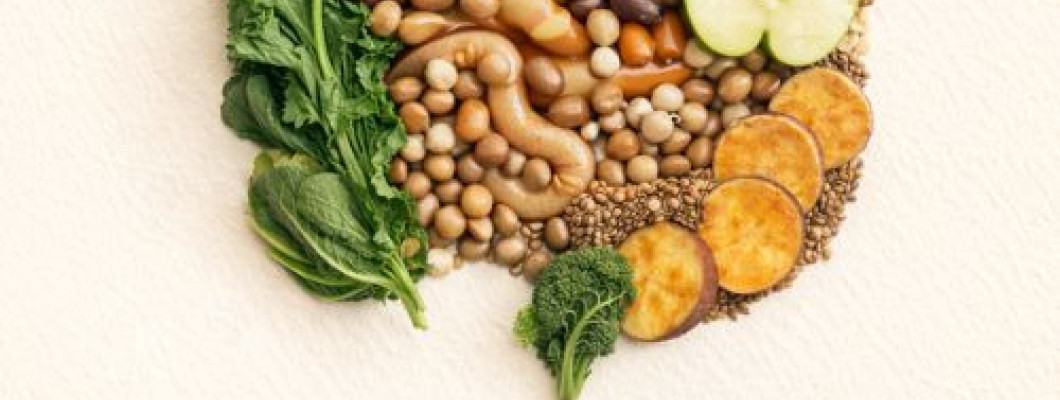
Fiber and gut microbiota: why your gut doesn’t digest it but your health needs it
The part of food your gut doesn’t want… but your microbiota does.
It’s not your fault. But it is your responsibility to understand this.
Today I want to talk about something everyone has heard of, but very few people truly understand: fiber.
And no, fiber is not just there to help you “go to the bathroom.” That is a very small version of a much bigger story.
What fiber really is
When we talk about dietary fiber, we are talking about compounds found mainly in plant foods that our digestive system cannot fully break down.
Does that mean it is useless?
Quite the opposite.
What you do not digest feeds one of the most important systems in your body: your gut microbiota.
What you don’t digest feeds your microbiota
When fiber reaches the colon intact, your gut microbiota takes over. There, fermentation takes place and produces compounds that matter deeply for health.
Among them are short-chain fatty acids, or SCFAs: acetate, propionate and butyrate.
And this is where things get really interesting.
Why short-chain fatty acids matter so much
These compounds are not a trend. They are key metabolites in gut physiology.
- Butyrate serves as an energy source for colon cells.
- They help maintain a more favorable gut environment.
- They are involved in immune modulation.
- They support the gut barrier function.
In other words, fiber does not magically “heal” anything. But it does help create a more protective metabolic environment.
Not all fiber behaves the same way
One of the biggest mistakes is to talk about fiber as if it were just one thing. It is not.
Its effects depend on several properties:
1. Solubility
Some fibers are soluble, meaning they dissolve in water. Others are insoluble and do not.
2. Viscosity
Some soluble fibers form gels. This can increase fullness, slow gastric emptying and help with blood sugar control.
A clear example is beta-glucans from oats.
3. Fermentability
Not all fibers ferment in the same way. Some ferment a lot, some partially, and some very little.
That explains:
- Why some fibers produce more gas than others.
- Why different people respond differently to the same food.
Let’s talk about gas without the drama
Yes, fermentation produces gas. And no, that does not automatically mean something is wrong.
Having no gas does not mean you have better gut health.
Having gas does not automatically mean your gut is doing worse either.
It depends on the type of fiber, the amount, your tolerance and, above all, your microbiota.
The overlooked concept: resistant starch
This is one of the most practical concepts if you want to improve gut health without making life complicated.
Foods rich in starch, such as potatoes, rice, pasta and some grains, can change their behavior depending on how you prepare them.
When you cook them and then cool them for several hours, part of that starch changes structure and becomes less digestible. That is called resistant starch.
What does that mean?
It means part of it is no longer absorbed in the small intestine and reaches the colon, where it can behave more like fiber and feed the microbiota.
Fiber also has a mechanical effect
It is not all about fermentation.
Fiber also plays a physical role:
- It increases stool bulk.
- It supports intestinal transit.
- It helps regulate bowel movements.
That is why people link fiber with constipation relief. But reducing fiber to that alone misses most of the story.
Fiber goes far beyond the gut
When your diet includes enough fiber and plant foods, the benefits do not stay in the colon.
- It can help with blood sugar control.
- It contributes to cholesterol regulation.
- It supports a more diverse and functional microbiota.
- It helps build better digestive and metabolic health.
The current problem
Many people today eat diets high in simple sugars, ultra-processed foods and fast options, while being low in vegetables, legumes, whole fruit, seeds and properly prepared tubers.
The problem is not just the bad things that come in.
It is also the good things that get pushed out.
Because when real food disappears, fiber, diversity and fuel for your microbiota disappear with it.
The main idea to remember
This is not only about “eating more fiber.”
It is about understanding that you are not feeding only yourself.
You are feeding an ecosystem that directly influences your digestive and metabolic health.
How to start simply
You do not need to do it perfectly. You just need to start.
A simple rule: add at least one plant food to every meal.
- If you have toast for breakfast, add sprouts, tomato or whole fruit.
- If you eat pasta or rice for lunch, add greens, vegetables or legumes.
- If you have animal protein for dinner, add mushrooms, vegetables and a cooked-and-cooled starch like potatoes or sweet potatoes.
And sometimes it is not just about adding. It is also about swapping.
- Swap juice for whole fruit.
- Swap cookies for carrot sticks with hummus.
- Swap ultra-processed snacks for an apple with tahini or a pear with cinnamon.
Fiber does not nourish you directly… but it makes everything else possible.
With love,
Helena.