IN SHORT
Bloating, a belly that appears “without eating more” and mood swings aren't always about your hormones: often the root is low-grade inflammation. Below we answer the most frequent questions about inflammation and hormones, backed by evidence.
10 answers to the 10 questions you ask us most about inflammation and hormones
What if your hormones weren’t the real problem?
Ana is 40 years old. For the past few months, she has been sleeping worse, waking up tired, noticing more belly fat although she eats more or less the same, feeling her legs swollen at the end of the day, experiencing very painful periods and looking in the mirror without quite recognising herself.
Like many women, she thinks: “My hormones are going crazy.”
But maybe that is not exactly the case. More and more research shows that many hormonal imbalances have something in common: chronic low-grade inflammation.
It does not cause fever. It does not always hurt. You cannot see it in the mirror. But it can change the way our hormones are produced, transformed and used by the tissues.
That is why today we want to answer the most common questions about inflammation and hormonal health.
1. Why do I always feel bloated even though I eat “well”?
Bloating does not always start in the gut. It may also be related to hormonal changes, fluid retention, stress or persistent inflammation.
During perimenopause, before menstruation or during periods of stress, many women are more prone to fluid retention and feeling “inflamed”, even without changing their diet. This may be related to a relative excess of oestrogens compared with progesterone.
What can you do?
- Eat cruciferous vegetables daily: broccoli, cauliflower, Brussels sprouts or radishes.
- Choose sprouts or steam them if raw vegetables do not suit you.
- Take 1 tablespoon of apple cider vinegar with meals if you tolerate it.
- Walk for 10-15 minutes after meals.
- Prioritise potassium-rich foods such as vegetables, kiwi, avocado or legumes.
- Stay well hydrated throughout the day.
2. Why do I have more belly fat now even though I am not eating more?
This is one of the most common questions during perimenopause and menopause.
The drop in oestrogens favours a redistribution of body fat towards the abdomen. In addition, muscle mass decreases, insulin sensitivity worsens and inflammation related to ageing, known as inflammaging, increases.
This does not mean that gaining weight is inevitable. It means your body needs different strategies.
What helps the most
- Strength training 2-3 times per week.
- Enough protein at every meal, around 30-35 g.
- Walking every day, ideally between 10,000 and 15,000 steps.
- Sleeping between 7 and 9 hours.
3. I have PMOS. Can inflammation worsen my symptoms?
Yes. Many women with Polyendocrine Metabolic Ovarian Syndrome have chronic low-grade inflammation, even when they have a normal weight.
Why does it happen?
Inflammation promotes insulin resistance. High insulin stimulates androgen production. This can make ovulation more difficult and keep the cycle going.
What can help?
- Strength training.
- Avoiding large glucose spikes.
- Including fibre and protein in every meal.
- Avoiding simple sugars and refined flours.
- Eating enough protein, around 30-35 g per meal.
- Keeping regular sleep schedules.
- Eating small oily fish or other omega-3 sources such as chia, flaxseed or walnuts regularly.
4. I have Hashimoto’s or hypothyroidism. What does this have to do with inflammation?
A lot. Hashimoto’s is an autoimmune condition. This means the immune system maintains an inflammatory response against the thyroid gland itself.
In addition, persistent inflammation may make it harder to convert T4 into T3, the active form of thyroid hormone.
What can you do?
- Maintain adequate levels of iron, selenium, zinc and iodine, without supplementing on your own.
- Do not smoke and avoid alcohol.
- Keep regular sleep schedules.
- If you take levothyroxine, separate it from coffee, soy, calcium and iron.
5. Why does everything hurt before my period?
Even if it is common, it does not mean you should normalise it.
During the second half of the menstrual cycle, oestrogen and progesterone levels change. This may increase prostaglandin production and make pain sensitivity higher.
That is why pelvic pain, breast tenderness, migraines, muscle tension and a feeling of inflammation may appear.
What can help?
- Omega-3, through food or supplementation when appropriate.
- Magnesium when intake is insufficient or a professional recommends it.
- Ginger in your meals.
- Prioritising rest during those days.
6. I have endometriosis. Can food make a difference?
Food does not cure endometriosis. But it may help create a less inflammatory microenvironment.
Research supports an eating pattern rich in vegetables, legumes, oily fish, extra virgin olive oil and nuts.
It is also advisable to limit regular consumption of alcohol, processed meats and ultra-processed foods.
7. Can my gut affect my hormones?
Much more than we might think. The microbiota is involved in oestrogen metabolism, immune system regulation, inflammation and the integrity of the intestinal barrier.
When microbial diversity decreases or intestinal permeability increases, this may favour an inflammatory environment that also affects hormonal health.
What can you do?
- Eat enough fibre, especially psyllium if you have digestive sensitivity.
- Include legumes several times a week in small amounts.
- Add fermented foods if you tolerate them.
- Eat a wide variety of fruits and vegetables.
8. Is it true that stress can disrupt hormones?
Yes. When cortisol remains elevated for weeks or months, it can promote insulin resistance, disrupt reproductive function and worsen inflammation.
The problem is not occasional stress. The problem is living permanently in survival mode.
A simple habit
Get natural light during the first 30 minutes of the morning. This helps synchronise your circadian rhythm and supports better cortisol regulation.
9. Why is it so hard for me to lose weight even when I diet?
Because body weight does not depend only on calories.
When inflammation persists, insulin resistance, poorer sleep, increased hunger, lower spontaneous energy expenditure and greater difficulty using fat as fuel may appear.
Start here
- Add protein to breakfast.
- Break your fast with protein, not sugar.
- Start meals with vegetables and protein before starchy foods.
- Walk for 10-15 minutes after each meal.
- Try to reach 10,000-15,000 steps per day.
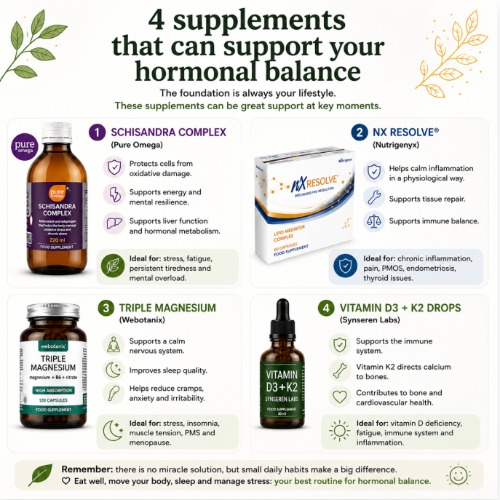
10. Are there supplements with scientific evidence?
Supplements never replace a balanced diet or medical treatment when it is needed.
But some have evidence in specific situations.
- Omega-3, especially EPA and DHA.
- Magnesium.
- Vitamin D, especially when there is a deficiency.
- Specialized pro-resolving mediators, known as SPMs.
SPMs do not “block” inflammation. They help the body complete the natural process of resolution and tissue repair.
Can my body switch off inflammation?
Yes. And this is one of the most interesting discoveries of recent years.
For a long time, we thought inflammation simply disappeared once the problem was gone. Today we know that is not the case.
Our body activates a real biological programme to end the inflammatory response. This is known as inflammation resolution.
We can imagine inflammation as a fire. First, the firefighters arrive to put out the flames. Then they clear the debris and repair the damage.
Something similar happens in our body. Inflammation is necessary to defend us. But we also need to resolve it in order to regain balance.
Myths and truths
❌ “If I have hypothyroidism, I cannot eat broccoli.”
✅ False. Cruciferous vegetables are part of a healthy diet. When eaten in usual amounts, cooked and within a diet with adequate iodine intake, they are not a problem for most people.
❌ “Menopause always makes you gain weight.”
✅ Not necessarily. Hormonal changes play a role, but muscle mass, exercise, rest and diet are also very important.
❌ “All inflammation is bad.”
✅ No. Inflammation is essential to defend us and repair tissues. The problem appears when it does not resolve and remains active for too long.
❌ “If I have PMOS, I only need to lose weight.”
✅ No. The approach to PMOS goes far beyond body weight and includes insulin sensitivity, sleep, physical activity, diet and inflammation.
What we would like you to remember
Hormones do not live in isolation. They work within a body that responds every day to how we eat, how much we move, how we sleep, how we manage stress and the state of our immune system.
That is why, when we talk about hormonal health, we are not trying to “control” hormones. We are trying to create the environment in which they can work properly.