


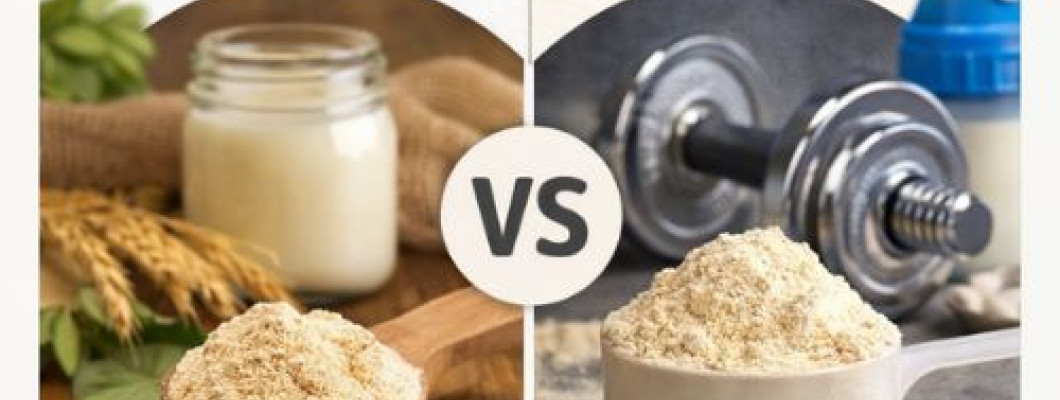
What protein is best? Why choosing organic protein makes sense
More and more people are asking the same question: what protein is best. And it makes sense. The market is full of options, flavors, claims, and promises, but the truth is simple: not all proteins are the same.
At Linverd, we see this all the time. Many people start taking protein because they want to build muscle, recover better, feel more energetic, or simply age better. But very often they buy a protein powder without stopping to think about one basic point: what is really inside that product and where does it come from.
That is why this article is not only about protein. It is about quality. It is about understanding why, if you are giving something to your body every day, it makes sense to choose an option that is cleaner, more honest, and more aligned with your health. And that is exactly where organic protein comes in.
Why protein matters so much
Protein is not only for athletes. It is an essential macronutrient needed to maintain core body functions and preserve the tissues that literally keep you strong and functional.
You need protein to maintain and build muscle mass, but also to create enzymes, hormones, cellular structures, and key components of the immune system. When intake is too low or muscle mass is deteriorating, the body feels it. Less strength, poorer recovery, a weaker metabolism, greater frailty, and an overall sense of accelerated aging.
That is why protein is increasingly being seen as one of the most important nutritional tools for well-being and longevity. It is not only about looking better. It is about having a body that is more functional, more resilient, and better prepared for the passing of time.
So, what protein is best?
The right answer is not the one with the biggest marketing budget, the cheapest tub, or the flashiest packaging. The best protein is the one that combines good digestibility, a complete amino acid profile, and a clean formula.
When we talk about protein powder, whey protein is often one of the most valued options because it provides all essential amino acids and contains a high amount of leucine, one of the key amino acids involved in triggering muscle protein synthesis.
But even within whey, there are major differences. And this is where many people get it wrong. It is not enough for the label to say “high protein” or “whey.” You need to look at the type of milk behind it, the secondary ingredients, and how heavily processed it is.
The problem with many conventional protein powders
A large part of the protein market is made up of products that are far removed from what many consumers think they are buying. On the surface, they look healthy, but once you read the label, you find artificial flavors, strong sweeteners, thickeners, maltodextrin, colorings, and other ingredients that have little to do with clean nutrition.
The issue is not only what gets added. The source matters too. In many conventional protein products, the milk comes from intensive systems where productivity is prioritized over nutritional quality and animal welfare. And even if the final consumer does not always notice it, origin matters.
If you are taking protein regularly, you are not just buying a macronutrient. You are buying a raw material, a production model, and a philosophy behind the product.
What does organic protein actually mean?
Organic protein comes from milk produced under certified organic standards. That means a more natural feeding system for animals, tighter production controls, restrictions on certain substances, and a level of traceability that is far more aligned with conscious nutrition.
On top of that, many organic proteins tend to have simpler formulas. In practice, that is a major advantage. Because when a protein is genuinely good, it does not need to hide behind a long list of ingredients.
In many cases, you find products with shorter, cleaner, and easier-to-understand ingredient lists. And for someone looking for real health alignment, that makes a huge difference.
Why choose organic protein
Choosing organic protein does not only mean choosing a protein to build muscle. It means choosing a protein that better fits a broader view of health.
The difference is not always about having dramatically more grams of protein than another product. The difference is often found in the overall quality: better sourcing, fewer unnecessary ingredients, better digestive tolerance in many cases, and a more honest product experience.
When someone truly wants to take care of themselves, they usually do not want a protein powder full of artificial extras. They want a practical way to reach their daily protein targets, recover better, and protect their muscle mass without consuming a daily mix of substances they do not actually need.
And that is exactly one of the reasons organic protein is becoming more relevant: it answers a real demand. People are no longer only asking what protein should I take, but what protein should I take that is actually good.
Organic protein and muscle mass
One thing should be clear here. Protein alone does not perform miracles. You are not going to see a major transformation just by adding one scoop a day if there is no proper context behind it.
To build or maintain muscle mass, you need three pillars: strength training, sufficient protein intake, and consistency. Protein powder does not replace a weak foundation. But it can be a very useful tool to help you reach what you need, especially if you eat little in the morning, rush meals, or struggle to hit your daily intake.
This becomes even more important with age. Over time, maintaining muscle stops being just an aesthetic goal and becomes a health priority. More muscle often means more independence, a better metabolism, better stability, better aging, and less frailty.
How to know whether a protein is worth it
If you are comparing options and want to know how to choose a good protein powder, look at these points:
1. Source. A standard protein is not the same as an organic protein made from more carefully sourced raw material.
2. Ingredients. The cleaner the formula, the better. Less filler, less artificial input, more real product.
3. Digestion. A protein can look great on paper and still make you feel terrible. Tolerance matters.
4. Real-life use. You do not need the most extreme product on the market. You need one that fits your lifestyle and that you can use consistently.
Conclusion: the best protein is not just the one with the most protein
For a long time, people focused only on grams per serving. But that is not enough. The best protein is not only the one that gives you more quantity, but the one that gives you better quality.
That is why more and more people are paying attention to organic options. They understand that taking care of the body is not just about reaching a certain number of grams each day, but about choosing products that make sense in the long term.
If you are asking what protein is best, the answer should not simply be “the one with the most protein,” but the one that suits your body best, comes from a better source, and helps you build real health.
And at that point, for many people, organic protein stops being a trend and becomes the logical choice.